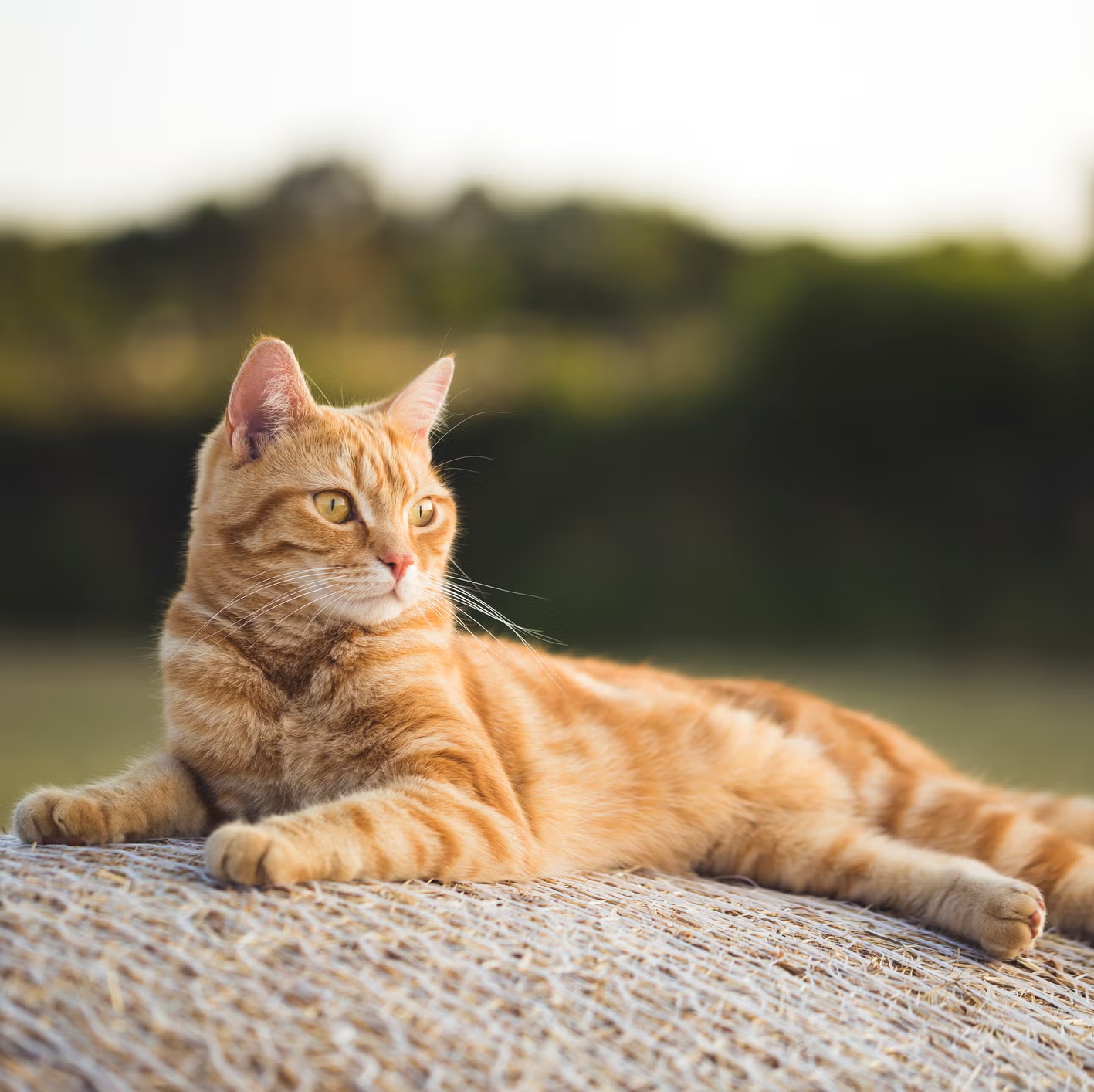
Whether you’re interested in adopting a cat or you already have a ginger kitty in your family, you may be curious about orange cat breeds. Not only are these adorable cats, but there is so much to admire about their bright coat colors and unique patterns. There is no single “orange cat breed,” just like there isn’t one gray cat breed or black cat breed. Rather, orange, ginger, and red coat colors can be found in various cat breeds, due to genetics. Ahead, we’ll explore several cat breeds that may include orange or ginger cats. But first, we’re answering some common questions about orange cats.
Whether you’re interested in adopting a cat or you already have a ginger kitty in your family, you may be curious about orange cat breeds. Not only are these adorable cats, but there is so much to admire about their bright coat colors and unique patterns. There is no single “orange cat breed,” just like there isn’t one gray cat breed or black cat breed. Rather, orange, ginger, and red coat colors can be found in various cat breeds, due to genetics. Ahead, we’ll explore several cat breeds that may include orange or ginger cats. But first, we’re answering some common questions about orange cats.
Orange cat genes
Orange coat colors in cats are typically the result of a specific coat color gene called pheomelanin that produces a yellow, orange, or reddish pigment (similar to the genes that may determine a person’s hair color). The term “orange cat” or “ginger cat” typically refers to cats with orange or red fur. It’s not a breed in itself, but rather a coat color. This orange gene is not exclusive to any one breed, so if you’re looking to add an orange fur baby to your family, there are plenty of cat breed options to consider. These cats can have various coat patterns, such as tabby, solid, or bicolor, and they are loved for their striking and fiery appearance.
Are orange cats rare?
You might see plenty of striped gray tabbies or multi-color felines, but how often do you see orange cats? Orange cats are actually not considered rare in the general cat population. The specific gene that produces pheomelanin is more common than you might think.
The prevalence of orange cats can vary by region and breed. In some areas, you may encounter more orange cats than in others. And certain breeds are more likely to have orange cats due to their genetic makeup. These breeds include: American Shorthair, British Shorthair, Maine Coon, and Persian. These breeds can produce orange or ginger-colored cats, and within these breeds, the specific coat color and pattern will vary widely. Some might be orange striped while others have orange spots.
Now that you know the science, here are ten house cat breeds that include orange cats:

1 American Shorthair
This popular cat breed can produce orange tabby cats with a classic, mackerel, or ticked tabby pattern.
- Height: Medium-sized, 9 to 11 inches
- Weight: Average, 8 to 15 pounds (males are typically larger and heavier than females)
- Personality: Friendly, adaptable, easygoing, affectionate with their families, sociable, good with children and other pets, playful, and not overly demanding
- Coat: Short, dense, and plush
- Color: Solid colors, bi-colors, calico (mix of white, black and orange), and various patterns
- Life Expectancy: 15 to 20+ years if healthy

British Shorthair
British Shorthairs, also a common cat breed, can have orange tabby cats as well as solid orange cats.
- Height: Medium-sized, 12 to 14 inches
- Weight: Slightly above average, 11 to 22 pounds (males are typically larger and heavier than females)
- Personality: Calm, easygoing, reserved, well-mannered, not overly active, affectionate with their families, not demanding, good with children and other pets
- Coat: Short, dense, and plush
- Color: British blue (solid blue-gray fur is the traditional color for this breed), but they also come in various solids, bi-colors, calico, and other patterns
- Life Expectancy: 12 to 20+ years if healthy

3 Maine Coon
Orange tabby Maine Coons are quite common and striking in appearance. They are one of the largest domestic cat breeds and are sometimes described as “gentle giants.”
- Height: Large, 10 to 16 inches
- Weight: Above average, 10 to 25 pounds (males are typically larger and heavier than females)
- Personality: Friendly, affectionate, sociable, intelligent, playful, retain kitten-like playfulness as adults, vocal, great with children and other pets
- Coat: Luxurious, semi-longhaired coat that is soft and dense with ruff of fur around their neck and a bushy tail
- Color: Wide range of coat colors and patterns, but tabby pattern is most common; can also be solid, bi-color, and calico
- Life Expectancy: 12 to 15+ years if healthy

4 Persian
Persian cats can come in various colors, including orange.
- Height: Small- to medium-sized, 8 to 10 inches
- Weight: Below average, 7 to 10 pounds (males are typically larger and heavier than females)
- Personality: Calm, gentle, affectionate, quiet, not overly active, prefer a peaceful atmosphere, and devoted to human companions
- Coat: Long, silky, and thick-double coat (will need to be brushed and groomed regularly)
- Color: Various colors and patterns with white, black, cream, blue, chocolate, and lilac being more common than orange; solid colors, bi-color, calico, tabby
- Life Expectancy: 12 to 16+ years if healthy

5 Scottish Fold
Orange Scottish Folds may have the signature folded ears and a range of orange shades.
- Height: Small- to medium-sized, 8 to 10 inches
- Weight: 6 to 13 pounds (males are typically larger and heavier than females)
- Personality: Sweet, affectionate, friendly, social, love being around human companions, playful yet gentle, good with children and other pets
- Coat: Short- or long-haired coats; fur is soft and dense
- Color: Variety of coat colors and patterns, like solid colors, bi-color, and tabby and various shades of black, gray, cream, brown
- Life Expectancy: 12 to 15+ years if healthy, though Scottish Fold cats are prone to osteochondrodysplasia, a genetic condition which can affect their bone and cartilage development

6 Munchkin
Munchkins, known for their short legs, can also be orange.
- Height: Short cats, 6 to 9 inches
- Weight: Below average, 5 to 9 pounds (but weight can vary depending on age, sex, and genetics)
- Personality: Friendly, playful, outgoing, curious, adaptable, enjoy interactive play, get along with humans (including children) and other pets
- Coat: Short- and long-haired coats; soft fur
- Color: Various colors and patterns, like solid color, bi-color, calico, tabby
- Life Expectancy: 12 to 15+ years if healthy (but Munchkin cats are prone to health issues like dental issues and obesity)

7 Manx
Manx cats may exhibit orange tabby patterns or solid orange coats.
- Height: Medium-sized, 8 to 10 inches
- Weight: Average, 8 to 12 pounds (males are typically larger and heavier than females)
- Personality: Friendly, intelligent, playful, affectionate, social, adaptable, enjoy interacting with humans, get along well with children and other pets
- Coat: Short- and long-haired; fur is dense and soft
- Color: Various colors and patterns, like solid colors, bi-color, calico, tabby, and more
- Life Expectancy: 12 to 15+ years if healthy (but prone to some health issues, like spinal and tail abnormalities due to the genetic mutation that results in their short tails or taillessness)

8 Cornish Rex
This breed can have orange cats with their distinctive curly fur.
- Height: Medium-sized, 8 to 10 inches
- Weight: Below average, 5 to 8 pounds
- Personality: Playful, extroverted, intelligent, curious, love to play, affectionate, outgoing, social, enjoy interacting with human companions
- Coat: Unique, short, curly, and soft coat; velvety, suede-like texture (may need to wear a sweater during cooler weather)
- Color: Various colors and patterns, like solid colors, bi-color, calico, tabby
- Life Expectancy: 12 to 15 years if healthy
RELATED: 9 Hairless Cat Breeds for an Allergy-Friendly Home

9 American Bobtail
Orange tabby American Bobtails are not uncommon.
- Height: Medium-sized, 9 to 12 inches
- Weight: Average, 7 to 16 pounds (males are typically larger and heavier than females)
- Personality: Friendly, playful, intelligent, social, affectionate, adaptable, form strong bonds with human families, known to have dog-like behavior, enjoy playing fetch and walking on a leash, get along well with children and other pets
- Coat: Semi long-haired, thick and dense fur, soft
- Color: Various colors and patterns, like solid colors, bi-color, calico, and tabby
- Life Expectancy: 12 to 16 years if healthy

10 Siberian
While not as common, you can find orange Siberian cats as well.
- Height: Medium- to large-sized, 9 to 11 inches
- Weight: Above average, 10 to 20 pounds (males are typically larger and heavier than females)
- Personality: Friendly, affectionate, intelligent, sociable, outgoing, playful, enjoy interacting with humans, can learn tricks, enjoy puzzle toys, known to “talk” and be vocal with owners, great with children and other pets
- Coat: Semi long-haired, dense coat (can thrive in the cold), soft fur
- Color: Various colors and patterns, like solid colors, bi-color, calico, tabby
- Life Expectancy: 12 to 15+ years if healthy
Should you adopt an orange cat?
The short answer is: yes! Adopt an orange fur baby if you want one, but consider the breed also. If you want a lap cat, try for a Maine Coon who are known to act more like pups. If you want a very active kitty, consider the Cornish Rex. But it’s also important to note that even if a breed is known to have a certain temperament, it’s not an exact science. Many cats — unless they’re definitely purebred — will be a mix of breeds and characteristics. Plus, cats in general are just fickle, purebred or not. They’re a lot like people; they are born with a personality, and their behaviors will also be dependent on their environment and the people and other animals around them.
RELATED: Why Do Cats Knead? Vets Explain the Reasons Behind the Behavior
About the Author