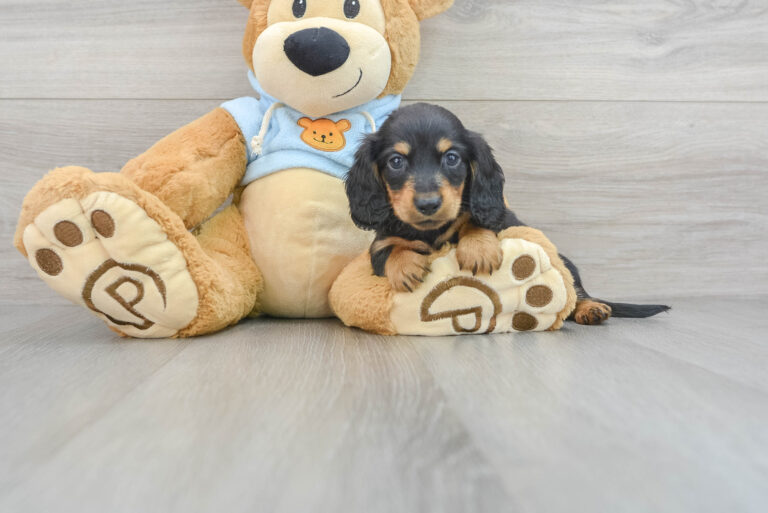
So you’ve fallen for those soulful eyes, that impossibly long body, and those tiny little legs. Welcome to the club. Dachshunds affectionately nicknamed “wiener dogs,” “sausage dogs,” or “hot dogs” are one of the most popular dog breeds in the world, and for good reason. They are fiercely loyal, endlessly entertaining, and packed with personality. But before you rush to pick up your new puppy, there are some important things to know. Dachshunds are wonderful companions, but they come with a unique set of needs, quirks, and health considerations that every prospective owner should understand.
A Brief Look at the Breed
Dachshunds were originally bred in Germany in the 15th century to hunt badgers. Their long, low-slung bodies were purpose-built for burrowing into dens, and their tenacious temperament made them fearless hunters. That hunting heritage is still very much alive in the modern dachshund. Don’t let the small size fool you this is a bold, independent, and sometimes stubborn dog with the spirit of a much larger breed.
Dachshunds come in two sizes: standard (typically 16–32 lbs) and miniature (under 11 lbs). They also come in three coat types smooth, longhaired, and wirehaired each with slightly different grooming needs and even temperament tendencies. Wirehaired dachshunds, for example, tend to be a bit more energetic and mischievous, while longhaired ones are often described as gentler and more laid-back.
Temperament: What You’re Really Getting Into
Dachshunds are devoted to their families. They bond deeply with their people and often become strongly attached to one person in particular. This loyalty is one of their most endearing traits, but it does come with a flip side: separation anxiety. A dachshund left alone for long hours can become destructive, vocal, and stressed. If you work long days away from home without a plan for your dog’s companionship needs, this may not be the right breed for you at least not without a solid support system.
They are also notoriously stubborn. Bred to work independently underground, dachshunds are not naturally inclined to defer to human authority. Training a dachshund requires patience, consistency, and a healthy sense of humor. They are smart enough to understand what you want they just may decide they have better ideas.
One thing future owners are sometimes surprised by: dachshunds can be vocal. They bark. Sometimes a lot. At strangers, at squirrels, at the mail carrier, at a noise they heard three blocks away. Early socialization and training can help manage this, but if you live in an apartment building with thin walls and noise-sensitive neighbors, it’s worth factoring in.
Training Your Dachshund Puppy
Start training the moment your puppy comes home. The earlier you establish routines and boundaries, the better. Use positive reinforcement treats, praise, and play because dachshunds do not respond well to harsh corrections. They are sensitive dogs beneath all that bravado, and punitive training methods will shut them down or make them more resistant.
Housetraining is often cited as one of the bigger challenges with the breed. Dachshunds can be notoriously slow to fully housetrain, and some owners report it taking six months or longer to achieve reliable results. Crate training is highly recommended. A crate gives your puppy a den-like space (which they instinctively love, given their burrowing heritage) and helps prevent accidents when you can’t supervise.
Socialization is equally important. Expose your puppy early and often to different people, dogs, sounds, and environments. A well-socialized dachshund is a confident, adaptable companion. One that misses this window can become fearful or reactive which in a dog prone to barking is not a combination you want.
Exercise and Activity Needs
Despite their small size, dachshunds need regular exercise. A couple of short-to-moderate walks per day, along with some playtime, is generally sufficient. They enjoy sniffing and exploring, so walks that allow them to follow their nose are particularly satisfying for the breed.
However and this is important never let your dachshund jump excessively from heights. No leaping off couches, no bounding down stairs, no rough play that twists or jolts the spine. This leads directly to the breed’s most serious health concern.
The Most Important Health Issue: IVDD
If there is one thing every dachshund owner absolutely must know, it is Intervertebral Disc Disease (IVDD). Because of their long spines and short legs, dachshunds are genetically predisposed to this condition. IVDD occurs when the discs between the vertebrae harden and rupture, pressing on the spinal cord. It can cause pain, partial paralysis, or in severe cases, complete loss of hind-limb function.
Statistics suggest that roughly 25% of dachshunds will experience some degree of IVDD in their lifetime. The risk is highest between ages 3 and 7, but it can occur at any age.
The good news: you can significantly reduce the risk with a few lifestyle adjustments:
- Use ramps or steps for furniture and car access instead of allowing jumping
- Keep your dachshund at a healthy weight excess weight puts enormous strain on the spine
- Avoid activities that involve repeated jumping, twisting, or sudden impact
- Know the warning signs: yelping in pain, reluctance to move, hunched back, dragging hind legs, loss of bladder or bowel control
IVDD is treatable, especially when caught early. Treatment ranges from crate rest and medication for mild cases to surgery for severe ones. But prevention and early detection are always better than intervention.
Other health issues to be aware of include dental disease (very common in small breeds), eye conditions such as progressive retinal atrophy, and obesity — which dachshunds are remarkably prone to, given their love of food and their ability to look perpetually starving.
Feeding Your Dachshund
Feed your dachshund puppy a high-quality food formulated for small breeds. Puppies need more frequent meals typically three times a day until around six months, then twice daily. Portion control is essential. Dachshunds are expert beggars and will happily overeat if given the opportunity.
Because obesity is such a significant risk factor for IVDD and other health problems, maintaining an ideal body weight is one of the most important things you can do for your dog’s long-term wellbeing. You should be able to feel your dachshund’s ribs without pressing hard, and they should have a visible waist when viewed from above.
Avoid free-feeding (leaving food out all day). Structured mealtimes make it easier to monitor how much your dog is eating and help with housetraining as well.
Grooming Needs
Grooming requirements vary by coat type:
- Smooth-coated: The lowest maintenance of the three. A weekly wipe-down or brush is usually sufficient.
- Longhaired: Requires regular brushing several times a week to prevent tangles and mats, especially around the ears and chest.
- Wirehaired: Needs hand-stripping or trimming a few times a year, plus regular brushing.
All dachshunds need routine nail trims, ear cleaning, and dental care. Their long, floppy ears can trap moisture and debris, making them prone to ear infections if not kept clean and dry.
Is a Dachshund Right for You?
Dachshunds are best suited to owners who have time to invest in their emotional and physical wellbeing, can commit to consistent training, are prepared for the health responsibilities of the breed, and genuinely enjoy a dog with a big personality in a small package.
They can do well in apartments if adequately exercised. They generally do well with other dachshunds (they often adore each other) and can coexist peacefully with cats and other pets if socialized early. They can be wonderful with children, though very young children should always be supervised dachshunds don’t appreciate rough handling and won’t hesitate to communicate their displeasure.
Final Thoughts
Bringing home a dachshund puppy is the beginning of a relationship that is equal parts challenging and deeply rewarding. These little dogs will make you laugh, test your patience, steal your blankets, and love you with an intensity that is genuinely moving. They are not the easiest breed, and they are not for everyone. But for the right person, there is nothing quite like a dachshund.
Do your homework, find a reputable breeder or rescue organization, puppy-proof your home with spine safety in mind, and get ready for one of the most entertaining companions you will ever have.
Your wiener dog awaits.
About the Author