The Rottweiler, often called a “Rottie,” is one of the most recognizable and respected dog breeds in the world. With its muscular build, confident demeanor, and striking black-and-tan coat, the Rottweiler commands attention wherever it goes. Despite its reputation as a formidable guardian, this breed is deeply affectionate, intelligent, and devoted to its family. When properly trained and socialized, Rottweilers make exceptional companions, blending strength with gentleness.
In this comprehensive guide, we’ll explore the Rottweiler’s rich history, physical characteristics, temperament, care requirements, training needs, common health concerns, and debunk some common myths. Whether you’re considering adding a Rottweiler to your home or simply want to learn more about this remarkable breed, read on to discover why the Rottweiler remains a favorite among dog lovers.
History of the Rottweiler
The Rottweiler’s origins trace back to ancient Rome, where its ancestors—mastiff-type dogs—accompanied Roman legions as they marched across Europe. These powerful dogs herded and guarded livestock that fed the armies, protecting them during long campaigns. When the Roman Empire fell, some of these dogs remained in the region that is now southern Germany, particularly around the town of Rottweil.
Over centuries, the breed evolved into the “Rottweiler Metzgerhund” (Butcher’s Dog of Rottweil). They drove cattle to market, pulled meat carts, and guarded butchers’ money pouches—earning a reputation for reliability and strength. By the 19th century, as railroads replaced cattle drives, the breed’s role shifted toward guarding and police work.
The modern Rottweiler was standardized in the early 20th century. The first breed club formed in Germany in 1901, and the breed gained recognition from the American Kennel Club (AKC) in 1931. Today, Rottweilers excel in roles like search and rescue, therapy work, and family protection.
Physical Characteristics and Appearance
Rottweilers are medium-to-large dogs with a robust, compact build that exudes power and agility. According to the AKC breed standard:
- Height: Males stand 24–27 inches at the shoulder; females 22–25 inches.
- Weight: Males typically 95–135 pounds; females 80–100 pounds.
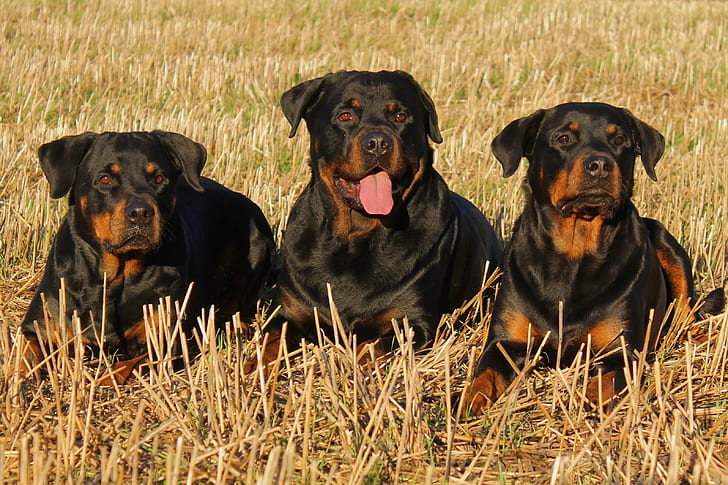
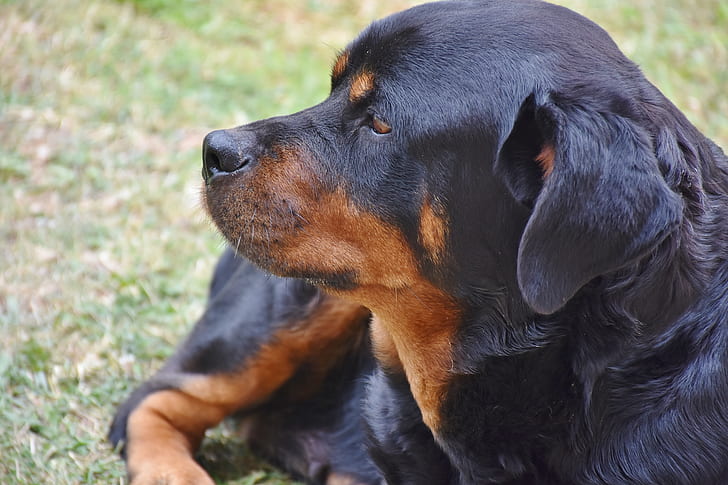
- Coat: Short, dense, and straight—always black with rust-to-mahogany markings on the cheeks, eyebrows, legs, chest, and under the tail.
- Head: Broad with a strong muzzle and expressive dark eyes.
The breed’s signature look includes tan “eyebrows” and a confident, alert expression. Their double coat sheds moderately, with heavier shedding twice a year.
Temperament: Loyal, Confident, and Calm
Rottweilers are often described as “gentle giants” when raised properly. They are:
- Loyal and affectionate: Deeply bonded to their family, often following owners around the house.
- Confident and calm: They have a “wait-and-see” attitude, assessing situations before reacting.
- Protective: Natural guardians who are reserved with strangers but not inherently aggressive.
- Intelligent and eager to please: Quick learners who thrive on mental stimulation.
Individual personalities vary—some are clownish and playful, while others are more reserved. With proper socialization, they are excellent with children and can be goofy goofballs at home.
Care and Grooming Needs
Rottweilers are low-maintenance in grooming but high in exercise and attention.
- Exercise: They need 1–2 hours of daily activity, including walks, play, and mental games. Without enough exercise, they can become bored and destructive.
- Grooming: Brush weekly to control shedding; bathe as needed. Check ears and trim nails regularly.
- Diet: Feed high-quality large-breed food to support joint health. Monitor portions to prevent obesity.
- Living Environment: They adapt to apartments if exercised enough but prefer homes with yards.
Training and Socialization
Rottweilers are highly trainable but require consistent, firm, positive leadership.
- Start early: Begin socialization from puppyhood—expose them to people, dogs, noises, and environments.
- Positive reinforcement: Use treats, praise, and play for obedience commands.
- Basic commands: Focus on sit, stay, come, and heel. Enroll in puppy classes.
- Leadership: Establish rules early to prevent dominance issues.
Early socialization prevents fear-based behaviors and ensures a well-adjusted adult dog.
Common Health Issues and Lifespan
Rottweilers are generally healthy but prone to certain conditions:
- Hip and elbow dysplasia — Joint issues common in large breeds.
- Heart problems — Such as subaortic stenosis.
- Cancer — Higher risk in some lines.
- Obesity — Can worsen joint problems.
Average lifespan: 9–10 years. Regular vet check-ups, a balanced diet, and exercise help maximize health.
Myths vs. Facts: Debunking Misconceptions
- Myth: Rottweilers are inherently aggressive. Fact: Aggression is not a breed trait—it’s often due to poor breeding, lack of socialization, or training.
- Myth: They’re only guard dogs, not family pets. Fact: With proper upbringing, they’re loving family members and great with kids.
- Myth: They’re unpredictable. Fact: Well-bred, trained Rottweilers are calm, confident, and predictable.
Is a Rottweiler Right for You?
The Rottweiler is an incredible breed for experienced owners who can provide leadership, exercise, and socialization. They thrive in active households and reward devoted owners with unmatched loyalty and protection.
If you’re ready for a strong, intelligent, and loving companion, the Rottweiler could be the perfect addition to your life.