What began as fans sewing handmade costumes in living rooms has evolved into a worldwide phenomenon reshaping fashion, commerce, community, and the very idea of who we are allowed to be.
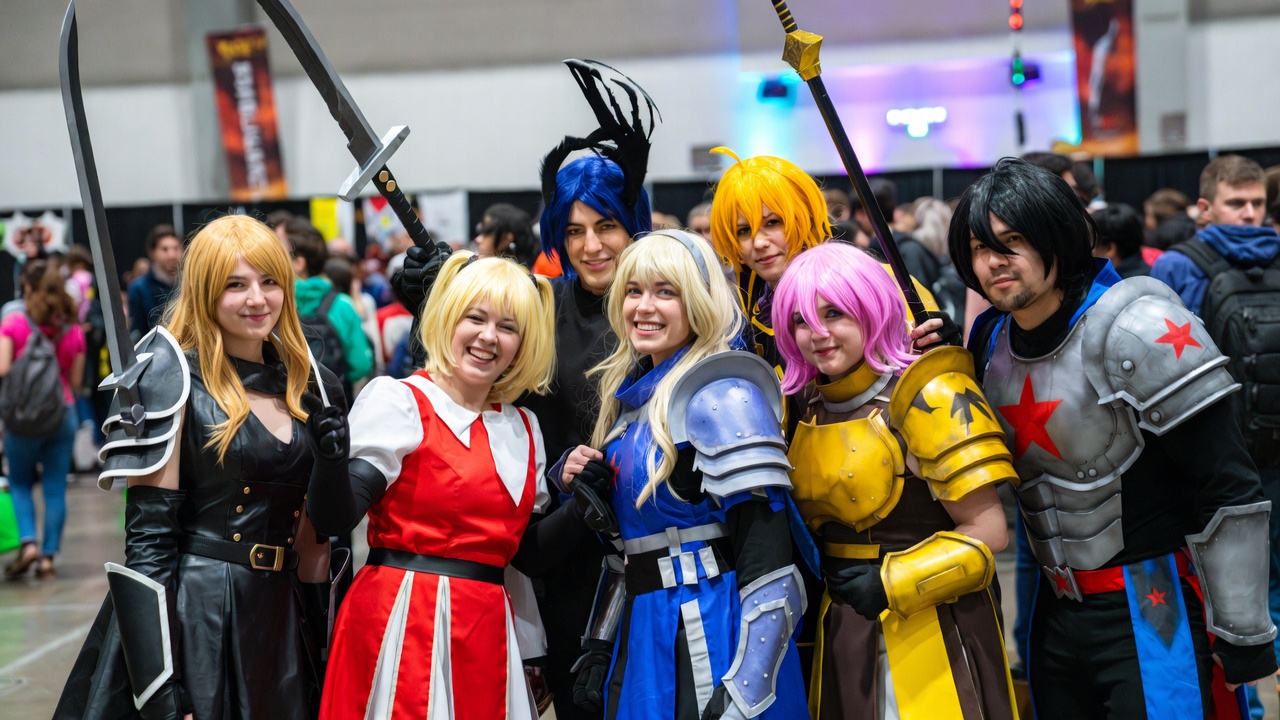
Walk through the halls of any major fan convention today — San Diego Comic-Con, Comiket in Tokyo, MCM London, or DreamHack in Stockholm — and you will encounter something impossible to ignore. Thousands of people, young and old, from every background imaginable, dressed with extraordinary care as characters drawn from comics, video games, anime, films, mythology, and original imagination. Some costumes took weeks of labor. Others represent savings of months. All of them represent a decision: today, I will be someone else — or perhaps more honestly, I will be more fully myself.
This is cosplay. And it is no longer a niche pastime for the socially awkward, a stereotype that once shadowed the hobby like a persistent ghost. It is a global cultural movement with millions of active participants, a multibillion-dollar industry, and a growing academic literature exploring what it means for identity, art, community, and human expression in the digital age.
The Origins: From Masquerade to Movement
The word “cosplay” is itself a fusion — a portmanteau of “costume” and “play” coined by Japanese journalist Nobuyuki Takahashi in 1984 after attending the World Science Fiction Convention in Los Angeles. But the act it names is far older. Science fiction fans were hosting masquerade balls at conventions as early as 1939. What changed in the following decades was not the impulse to dress up, but the cultural infrastructure that surrounded it.
Japan accelerated everything. Through the 1970s and 1980s, as manga and anime exploded into mainstream Japanese culture, fans began creating elaborate costumes of beloved characters at events like Comiket, founded in 1975. The craftsmanship was remarkable from the start. Japanese cosplayers — often called “cosers” — developed techniques in foam work, thermoplastics, wig styling, and makeup that transformed costume construction into a genuine craft discipline. By the 1990s, the internet began to carry these images around the world, and a global movement stirred awake.
“Cosplay is the only art form where the artist becomes the artwork — where the medium is your own body, and the canvas is the world around you.”
— Widely attributed to the cosplay community
The Craft: Artistry at the Core
To dismiss cosplay as mere dress-up is to misunderstand what is actually happening in those late-night crafting sessions. Competitive cosplayers — and there are now international competitions with serious prize pools — are practicing skills that span sculpture, sewing, electrical engineering, 3D modeling, painting, and theatrical performance. A single elaborate build might require months of work, a working knowledge of multiple materials, and a budget that rivals a small production design department.
Consider the techniques involved: Worbla and EVA foam have become standard materials for building armor, weapons, and structural elements. Thermoplastic sheets are heat-molded and sanded to smooth perfection. LED systems are wired into costumes to create glowing effects. Fabrics are dyed, distressed, and aged to match fictional reference images with obsessive fidelity. Wigs are cut, teased, and styled with the precision of a hair sculptor. And all of this is often self-taught — passed through online tutorials, community forums, and the generous sharing culture that defines cosplay at its best.
The World Cosplay Summit, held annually in Nagoya, Japan, draws national teams from dozens of countries who compete to produce the most faithful and technically impressive costume recreations. It is, in every meaningful sense, a world championship of wearable art. That this competition exists at all — broadcast, judged, celebrated — signals how far the craft has traveled from its humble origins.
The Economics of Expression
Cosplay has quietly become big business. Beyond convention sales of costumes and accessories, professional cosplayers generate income through social media, brand partnerships, convention appearances, and content creation. Platforms like Patreon and Instagram have made it possible for skilled costumers to build full-time careers entirely on the strength of their craft and personality — a development that would have seemed fantastical even fifteen years ago.
Identity and Belonging: Who Gets to Be a Hero
If the craft is the body of cosplay, identity is its beating heart. Ask any experienced cosplayer why they do it, and beneath the practical answers about creativity and community, you will find something deeper: the experience of inhabiting a character who matters to them. Of walking through the world, even briefly, as someone powerful, beautiful, complex, or free.
This dimension of cosplay carries particular significance for groups who have historically been underrepresented in the stories they love. Black, Asian, Latinx, and Indigenous cosplayers have used the medium to claim characters across racial lines, sparking both controversy and important cultural conversations. The rise of terms like “race-bending” — cosplaying a character as a different race than their canonical depiction — has challenged the idea that fictional characters belong only to audiences who share their visual appearance. These debates are sometimes uncomfortable, but they are productive: cosplay has become a space where the politics of representation are worked out in vivid, personal, human terms.
Similarly, disabled cosplayers have built an entire creative culture around adaptive costuming — finding ways to bring beloved characters to life that honor both the character and the cosplayer’s own body. Wheelchair users have reimagined their chairs as Cinderella carriages, X-Men vehicles, and spaceship cockpits. Amputees have turned prosthetics into iconic fictional weapons and accessories. The message is consistent and powerful: these stories belong to everyone, and everyone can inhabit them.
Community: The Convention as Third Place
Sociologists speak of “third places” — spaces that are neither home nor work, where community is built organically. For millions of cosplayers, conventions and online communities serve exactly this function. The convention floor is a space governed by different social rules: strangers approach each other freely, compliments are expected and welcomed, and the shared language of fandom dissolves the barriers that normally separate people.
For many participants, especially young people navigating the social difficulties of adolescence, or adults who have struggled to find community in conventional spaces, this experience is genuinely transformative. Studies on fan communities have consistently found that convention attendance is associated with reduced feelings of loneliness and increased sense of social belonging. Cosplay, which requires visible commitment and is guaranteed to generate attention and conversation, accelerates these effects.
The online dimension has expanded this community without bound. Discord servers, subreddits, TikTok build videos, and Instagram costume showcases have connected cosplayers across geographic and cultural distances. A teenager in Lagos can exchange foam-working tips with a master costumer in Seoul. A first-time builder in rural Canada can receive encouragement from a professional cosplayer in Berlin. The craft is borderless in a way that very few cultural activities manage to be.
Cosplay Goes Mainstream — and What That Means
The mainstreaming of cosplay has been rapid and, like all mainstreaming, double-edged. On one hand, greater visibility has brought legitimacy, opportunity, and new participants. Mainstream fashion has absorbed cosplay’s influence, with designers like Versace and Moschino referencing anime aesthetics on runway shows. The Marvel Cinematic Universe and the explosion of IP-driven entertainment have created an ever-expanding universe of source material and a permanent appetite for costumes. Halloween, once the only widely acceptable occasion for adult costuming, now shares cultural space with year-round cosplay culture.
On the other hand, commercialization has created tensions within the community. Mass-manufactured costumes sold online lack the craft and individuality that define cosplay at its best. Influencers with resources and platforms can come to dominate visibility in ways that overshadow skilled craftspeople who make everything by hand. And the increasing monetization of content creation has introduced commercial pressures into what was once a purely expressive space.
Yet the community has shown remarkable resilience. The values of cosplay — creativity, generosity, craftsmanship, inclusion — are strong enough to survive commercial pressure because they are held not by institutions but by people. Every time an experienced costumer takes time to answer a beginner’s question online, every time a group spontaneously forms in a convention hallway to recreate a beloved scene, the culture renews itself from the inside.
A Mirror for the Digital Age
Perhaps what cosplay ultimately reflects is something essential about human beings in the digital era. We live in a time when identity is understood as more fluid, more chosen, and more performative than at any previous point in history. We curate our online selves, shift between different social contexts, and increasingly reject the idea that who we are is simply given to us by birth, geography, or circumstance. Cosplay makes this fluidity visible and physical. It says: I chose to be this today. I built this self with my own hands. And this self is real.
There is also something quietly radical about gathering in public spaces to celebrate stories — to say collectively that the narratives we love matter enough to wear on our bodies. In an age of increasing individualism, cosplay creates community through shared reference. The person who recognizes your costume is not just a stranger; for a moment, they are someone who inhabits the same fictional universe, who has found meaning in the same story. That recognition is a small but genuine act of human connection.
From those early masquerade balls to billion-dollar conventions, from hand-sewn fabric costumes to 3D-printed armor systems, cosplay has traveled an extraordinary distance. It has become something that its originators could scarcely have imagined: a global language of creativity and identity, spoken by millions, across every border, in the universal tongue of imagination. And it shows no signs of stopping.