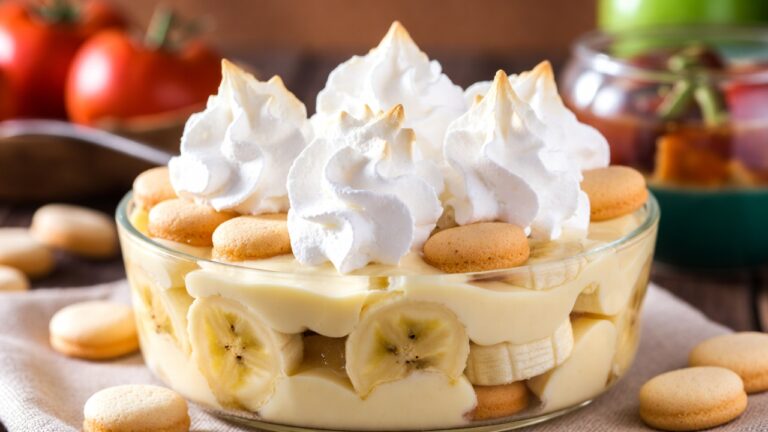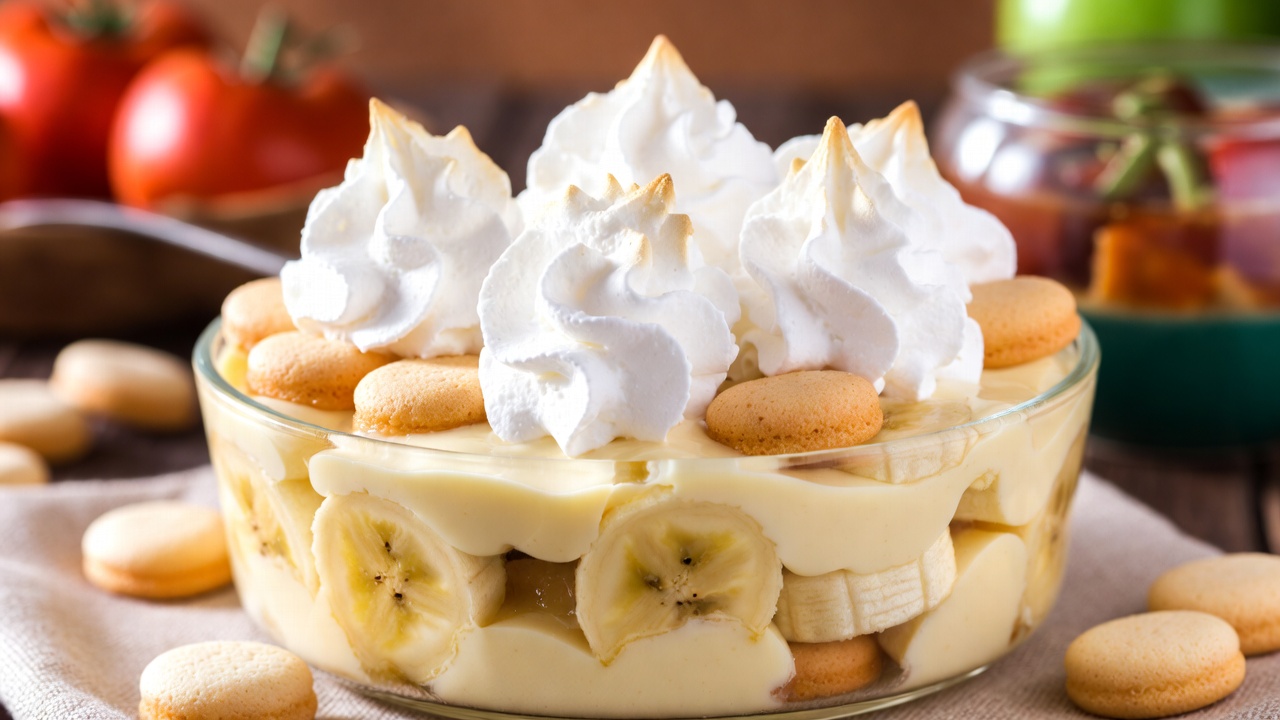
The creamy, dreamy Southern classic that’s been stealing hearts — and spoons — for over a century.
There are desserts, and then there is banana pudding. Not just pudding. Not just a banana dessert. We’re talking about the layered, creamy, vanilla-kissed, wafer-crunching, Nilla-stacked glory that has anchored potlucks, church suppers, family reunions, and late-night cravings for generations. It is comfort in a dish. It is a memory in a spoon. It is, quite simply, one of the greatest things the American South ever gave the world — and the world has been licking the bowl ever since.
So let’s talk about banana pudding. All of it — the history, the culture, the debate, the technique, and the very real emotional power that a humble combination of bananas, vanilla wafers, and pudding can hold over a fully grown adult human being.
A Brief, Glorious History
Banana pudding as we know it today didn’t spring fully formed from the Southern culinary tradition — it evolved. Bananas themselves were a luxury in the United States through much of the 19th century. When the tropical fruit became more widely available in the late 1800s thanks to expanding trade routes from Central America and the Caribbean, home cooks began incorporating them into existing pudding recipes rooted in English trifle and boiled custard traditions.
The watershed moment came in 1921, when Nabisco began printing a recipe for “Banana Pudding” directly on the box of their Vanilla Wafers — a clever marketing move that cemented the wafer’s role as an inseparable partner to the pudding. That recipe called for layers of vanilla custard, sliced bananas, and wafers, topped with a meringue browned in the oven. It became iconic almost instantly.
“Banana pudding isn’t just a recipe — it’s a ritual. The layering, the waiting, the first scoop. Every step matters.”
Through the mid-20th century, the dish spread across Southern kitchens and African American food culture, where it was elevated and personalized — each family adding its own twist, its own touch, its own secret. By the time instant pudding mix hit supermarket shelves in the 1950s, banana pudding had become both a labor-of-love recipe and a weeknight shortcut. Both versions, in their own right, are spectacular.
🍌 🍮 🍌
The Great Topping Debate: Meringue vs. Whipped Cream
If there is one thing banana pudding lovers argue about more than anything else, it is the topping. And it is a battle fought with deep conviction on both sides.
Team Meringue
The original recipe calls for a meringue — egg whites whipped to stiff peaks, sweetened, and browned under the broiler or in the oven. Meringue gives the pudding a baked, slightly toasty flavor, a marshmallow-like texture, and a nostalgic old-fashioned quality that purists swear by. When that meringue is done right, with its golden peaks and its pillowy interior, it is a genuinely beautiful thing.
Team Whipped Cream
But somewhere along the way — probably around the 1970s — whipped cream entered the chat. Cool Whip, then real heavy cream, folded into cream cheese or sweetened condensed milk, piled high over the pudding. This version is richer, denser, and, many would argue, more satisfying. It’s the version you find at most restaurants, diners, and Southern dessert spots today. It requires no oven, sets up in the fridge, and has a luxurious, almost mousse-like quality when made with real whipped cream.
The honest answer? Both are correct. The real answer depends entirely on whose grandmother made which version.
The Anatomy of a Perfect Banana Pudding
Great banana pudding is built in layers — and those layers matter. Each component plays a specific role in creating the final experience.
The Essential Layers
- The Custard / Pudding Base — The soul of the dish. Whether made from scratch with egg yolks, sugar, milk, and cornstarch, or using a quality instant vanilla pudding mix, this layer needs to be silky, rich, and deeply vanilla-forward.
- The Bananas — Ripe but not overripe. You want sweet, soft bananas that have developed their full flavor — yellow with some brown spots is the sweet spot. Too green and they’re starchy; too brown and they turn mushy and bitter.
- The Wafers — Nilla Wafers are the classic, and for good reason. Their light vanilla flavor and soft-but-sturdy texture absorb the pudding beautifully, transforming over 8–12 hours in the fridge from crisp cookies to tender, cake-like layers. Some bakers substitute chessmen butter cookies for a richer, more buttery crunch.
- The Topping — Meringue or whipped cream. See above. No wrong answers.
The Overnight Secret
Here is the single most important piece of banana pudding wisdom anyone can give you: make it the night before. The magic of banana pudding doesn’t happen when you assemble it — it happens in the refrigerator, over hours, as the pudding soaks into the wafers, the bananas soften and perfume every layer, and the whole dish transforms from a collection of ingredients into something unified, harmonious, and deeply satisfying.
A freshly assembled banana pudding is fine. An overnight banana pudding is transcendent. This is not an opinion. This is fact. The wafers — which started out crisp — absorb just enough moisture to become almost cake-like in texture, while still maintaining just enough body to give each bite a little resistance. The banana flavor deepens and spreads throughout the custard. The whole thing settles into itself.
If you have never let a banana pudding rest overnight before serving it, you have never had banana pudding at its best. Plan accordingly.
🍌 Classic Southern Banana Pudding
The timeless recipe — creamy vanilla custard, ripe bananas, and Nilla wafers, finished with a pillowy whipped cream topping. Best made the night before.
Beyond the Classic: Modern Takes
Banana pudding has proven to be one of the most adaptable desserts in the American canon. Once you understand its core structure — creamy layer, fruit, cookie, topping — you can riff on it endlessly.
Bakeries in New York, Los Angeles, and Nashville have made names for themselves serving banana pudding in cups, jars, and parfait glasses with Oreo cookie crumbles instead of Nilla wafers, brûléed bananas on top, salted caramel swirled through the custard, or espresso-spiked pudding for a banana-coffee mashup that shouldn’t work but absolutely does. There are banana pudding cakes, banana pudding cheesecakes, banana pudding ice cream, banana pudding milkshakes, and banana pudding donuts. The spirit of the original lives in all of them.
And yet — and this is important — none of these elevated, artisan, Instagram-friendly interpretations have ever replaced the original. The version in the big Pyrex dish, passed down the potluck table, scooped with a large spoon into a paper bowl, eaten standing up in someone’s backyard in July — that version remains the gold standard. Irreplaceable. Undefeated.
Why It Hits Different
Food scientists and psychologists will tell you about the role of nostalgia in flavor perception — how foods we associate with comfort, safety, and love literally taste better to us because our brains process them differently. Banana pudding is a masterclass in this phenomenon.
For many people, particularly those raised in the American South, banana pudding is not just a dessert. It is a grandmother’s kitchen. It is a church potluck in 1994. It is summer, and paper plates, and the specific happiness of being a kid surrounded by people who love you. That emotional resonance doesn’t just add to the experience of eating banana pudding — in many ways, it is the experience.
But even setting all of that aside, even for someone encountering banana pudding for the very first time: the combination of cool creaminess, soft fruit, subtle vanilla, and that yielding cookie layer hits a particular combination of textures and flavors that is deeply, almost biochemically satisfying. Sweet but not cloyingly so. Rich but still light. Familiar but always a little surprising.
Final Thoughts: Long Live the Pudding
In a culinary world obsessed with novelty — with the next viral food, the newest technique, the most unexpected flavor combination — banana pudding stands apart. It does not need to be reinvented. It does not need to be elevated. It just needs to be made, with care, with good ingredients, and with enough time in the refrigerator to become what it is meant to be.
Whether you make it from scratch with a proper stovetop custard, or whether you fold instant pudding into cream cheese and call it a day, whether you crown it with meringue or a mountain of freshly whipped cream, whether you use Nilla Wafers or chessmen or whatever’s in the pantry — banana pudding will not let you down. It never has. It never will.
So make a big batch. Cover it. Put it in the fridge. Go to sleep. And in the morning, or at the party, or at the potluck, scoop it generously into bowls and watch every single person in the room get quiet for a moment — that good kind of quiet, the kind that only comes when something tastes exactly like it should.
That’s banana puddinnnn. And there’s nothing else quite like it.