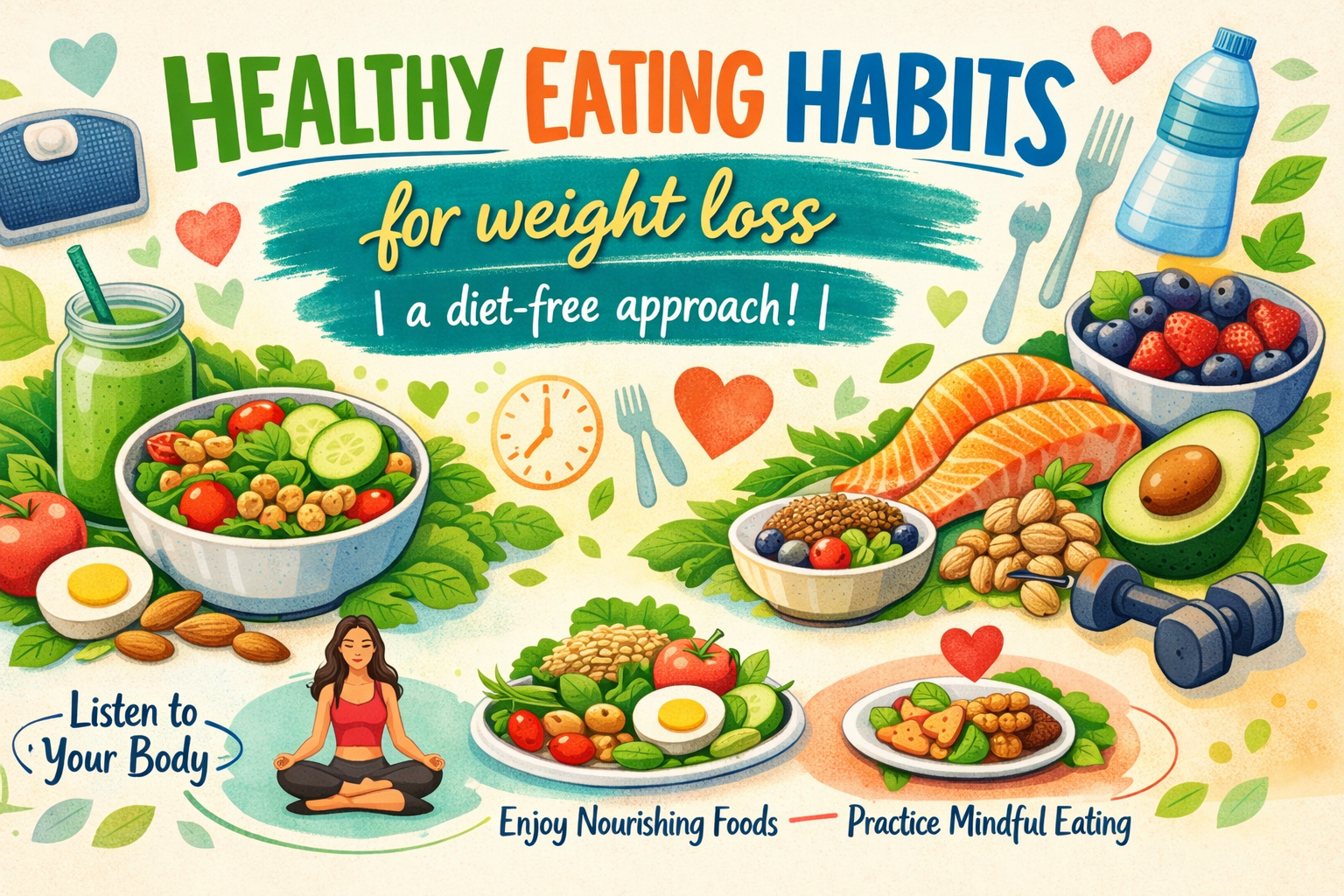
“The goal is not to be thin. The goal is to be healthy — and a healthy body, properly nourished and cared for, will naturally find its best weight.”
Scroll through any social media feed and you’ll be bombarded with contradictory advice: eat low-carb, go keto, try intermittent fasting, cut sugar entirely, drink lemon water every morning, never eat after 6 p.m. The diet industry is a multi-billion dollar machine built on one uncomfortable truth — diets don’t work long-term for most people. Studies consistently show that the majority of dieters regain the weight they lost, and often a bit more, within two to five years.
What does work? Building sustainable, enjoyable eating habits that support your body, respect your hunger, and still allow you to live a full life. That is what a diet-free approach to weight loss really means — and it is far more effective than any 30-day plan.
Why Diets Fail (And Habits Don’t)
Traditional diets operate on restriction. They tell you what you cannot eat, when you cannot eat, and how little you can eat. This triggers a primal stress response in the body: cortisol rises, metabolism slows, and the brain begins to fixate on precisely the foods it’s been denied. This is not a willpower problem. It is biology doing exactly what it was designed to do.
Habits, on the other hand, are automatic. When a behaviour becomes habitual, it requires almost no mental energy to sustain. You don’t decide to brush your teeth every morning — you just do it. The goal of a diet-free approach is to make healthy eating feel just as natural and effortless.
The Key Insight
Lasting weight loss is a side effect of a healthy lifestyle — not the goal of a punishing diet. When you eat well, sleep enough, manage stress, and move your body joyfully, your weight naturally tends toward a healthy range. Shift your focus from the scale to your habits, and the results follow.
Habit 1: Eat Mostly Whole, Minimally Processed Foods
This single habit, if adopted consistently, has more impact than any specific diet. Whole foods — vegetables, fruits, legumes, whole grains, lean proteins, nuts, and seeds — are nutrient-dense, fibre-rich, and deeply satisfying. Ultra-processed foods, by contrast, are engineered to override your body’s natural fullness signals, making it almost impossible to eat just one serving.
You don’t need to eat perfectly 100% of the time. Research supports the idea of an 80/20 approach: aim for whole, nourishing foods about 80% of the time and allow flexibility for the rest. This is sustainable. Perfection isn’t.
- 🥦 Leafy Greens
- 🐟 Fatty Fish
- 🫘 Lentils & Beans
- 🥚 Eggs
- 🍓 Berries
- 🥑 Avocado
- 🌾 Oats
- 🍗 Lean Poultry
- 🥜 Nuts & Seeds
- 🍠 Sweet Potato
Habit 2: Prioritise Protein at Every Meal
Protein is the unsung hero of weight management. It is the most satiating macronutrient, meaning it keeps you feeling full for longer and reduces the likelihood of impulsive snacking. Protein also has a high thermic effect — your body burns significantly more calories digesting protein than it does digesting fats or carbohydrates. And critically, adequate protein helps preserve lean muscle mass during weight loss, keeping your metabolism humming.
Aim to include a quality protein source at every meal: Greek yogurt at breakfast, grilled chicken or legumes at lunch, fish or tofu at dinner. Even small shifts — adding eggs to your morning or swapping refined crackers for cottage cheese and cucumber — make a meaningful cumulative difference.
Habit 3: Master the Art of Mindful Eating
Mindless eating — scrolling through your phone while inhaling lunch, eating straight from a bag on the couch, or grabbing food out of boredom — is one of the most underrated contributors to weight gain. When we eat without attention, we miss our body’s satiety signals entirely and routinely consume far more than we intended.
Mindful eating is the antidote. It simply means being present during meals: sitting at a table, eating slowly, chewing thoroughly, putting your fork down between bites, and pausing partway through to genuinely ask yourself whether you’re still hungry. You do not need to meditate before every meal. You just need to pay attention.
A smaller plate creates the visual impression of a full serving, reducing the likelihood of overeating without any conscious restriction.
It takes roughly 20 minutes for satiety signals to reach your brain. Eating slowly gives your body time to register fullness before you’ve overdone it.
Distracted eating is consistently linked to higher calorie intake. Make mealtimes a screen-free zone, even for just one meal a day.
Before eating, rate your hunger on a scale of 1–10. Aim to eat at a 6–7 and stop at a 4. This reconnects you with true physical hunger cues.
Habit 4: Drink More Water — Seriously
Mild dehydration is commonly mistaken for hunger. Before reaching for a snack, try drinking a full glass of water and waiting ten minutes. You may find the craving passes entirely. Beyond reducing false hunger signals, adequate hydration supports metabolism, energy levels, digestion, and skin health.
Aim for approximately two litres of water per day, more if you exercise, live in a hot climate, or consume a lot of caffeine. If plain water bores you, add slices of citrus, cucumber, or fresh mint. Replace sugary drinks — sodas, fruit juices, flavoured coffees — with water or herbal tea as a default, and you’ll cut hundreds of empty calories per week without a single moment of deprivation.
- 75% of people are chronically mildly dehydrated
- 30% fewer calories consumed when drinking water before meals
- 2L daily water target for most adults
Habit 5: Never Skip Breakfast — But Make It Work for You
The debate around breakfast is ongoing, and the honest answer is that it depends on the individual. For many people, a protein-rich breakfast stabilises blood sugar, prevents mid-morning energy crashes, and reduces the likelihood of overeating later in the day. For others, including those who practice time-restricted eating, skipping breakfast works perfectly well.
What consistently matters, regardless of timing, is the quality of your first meal. A breakfast built around protein and fibre — think eggs with vegetables, oats with nuts and berries, or Greek yogurt with seeds — sets a very different hormonal and metabolic tone than a sugary cereal or pastry. If you’re not hungry in the morning, don’t force it. But if you are hungry, make that first meal count.
Habit 6: Plan Ahead — Even Just a Little
Poor food choices are almost always the result of being caught hungry with no good options nearby. Meal prepping does not require cooking elaborate dishes every Sunday. It simply means thinking one or two steps ahead: keeping your fridge stocked with easy-to-grab whole foods, batch-cooking a grain or protein a couple of times per week, and having a handful of go-to meals you can assemble in under fifteen minutes.
The goal is to make the healthy choice the easy choice. When a nourishing meal is just as accessible as a bag of chips, you’ll reach for it far more often — not because of discipline, but because of convenience.
Habit 7: Rethink Your Relationship With Food
Perhaps the most important shift of all is emotional. Many people use food to cope with stress, boredom, loneliness, or anxiety. This is human and understandable — food is comfort, culture, and connection. But when emotional eating becomes the primary coping mechanism, it works against your health goals and often generates guilt that makes the cycle worse.
A diet-free approach asks you to approach food with curiosity and compassion rather than judgment. Notice the emotions that trigger eating that isn’t driven by hunger. Build a broader toolkit for managing those feelings: a short walk, a phone call with a friend, a few minutes of journaling. Remove moral language — food is not “good” or “bad,” and eating a cookie does not make you a failure. Consistency over time, not perfection in a single moment, is what shapes your health.
Small Habits, Extraordinary Results
The research on behaviour change is clear: small, consistent improvements compound into extraordinary outcomes over time. You don’t need to overhaul your entire diet overnight. In fact, trying to do so is one of the surest ways to burn out and rebound. Instead, choose one habit from this list and practice it consistently for two to three weeks. Once it feels automatic, add another.
Over six months, a year, five years — these habits accumulate into a fundamentally different relationship with food. One where you eat well because it feels good, not because you’re following rules. One where your weight reflects your lifestyle, not your willpower. And one where food is, once again, something to enjoy.
Your Diet-Free Journey Starts Here
Choose one habit. Start today. Not Monday — today. Progress, however small, is infinitely more powerful than a perfect plan that never begins. Your body is not your enemy. Nourish it, listen to it, and it will work with you.