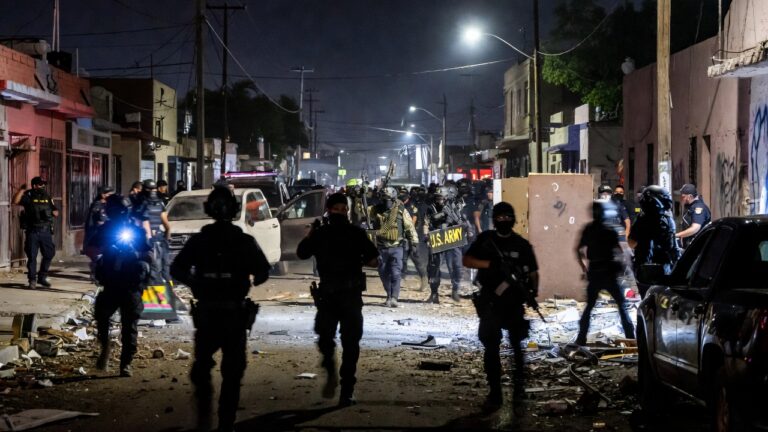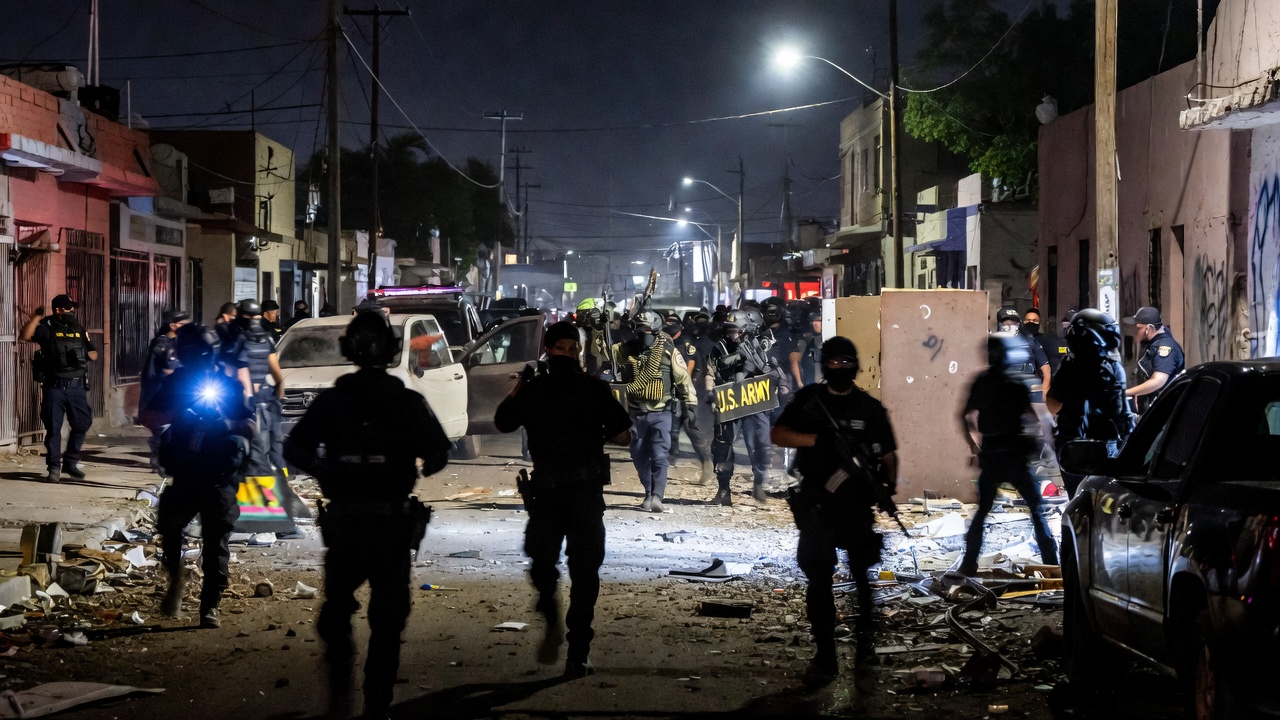
In the predawn hours of November 30, 2019, the quiet town of Villa Unión in Coahuila, Mexico, erupted into chaos. Heavily armed gunmen from the Cartel del Noreste stormed the municipality, unleashing a barrage of firepower on local police and civilians. The attackers, clad in military-style gear, wielded .50-caliber rifles capable of piercing armored vehicles and downing aircraft. For hours, the cartel fighters held the town under siege, spraying bullets into the town hall and police stations. State police, outgunned and overwhelmed, were forced to retreat and await reinforcements from the Mexican military. By the time the dust settled, four police officers, two civilians, and 19 cartel members lay dead. Amid the carnage, investigators recovered spent cartridges etched with the initials “L.C.” – a marking that traced back not to some clandestine arms dealer, but to the Lake City Army Ammunition Plant, a U.S. government-owned facility in Independence, Missouri.
This incident was no isolated anomaly. A joint investigation by The New York Times and the International Consortium of Investigative Journalists (ICIJ) has uncovered a disturbing pipeline: military-grade .50-caliber ammunition, manufactured at a plant designed to supply the U.S. Army, is flooding into Mexico via civilian markets and smuggling routes. These powerful rounds, each roughly the size of a medium cigar and engineered to destroy vehicles or light aircraft, are empowering Mexican drug cartels to escalate their violence against law enforcement and innocent bystanders. The revelations highlight glaring vulnerabilities in the U.S. ammunition supply chain, lax export controls, and the profound cross-border implications for security, diplomacy, and human lives. As Mexico grapples with surging cartel power, the flow of these U.S.-sourced weapons has become a flashpoint in bilateral relations, prompting demands for accountability and reform.
The Lake City Plant: A Dual-Purpose Powerhouse
At the heart of this controversy lies the Lake City Army Ammunition Plant, a sprawling 3,935-acre facility established during World War II and now the largest producer of small-caliber ammunition for the U.S. military. Owned by the federal government and operated under contract by Olin Winchester – a subsidiary of the Olin Corporation – the plant churns out up to 1.6 billion rounds annually. Its primary mandate is to supply the Pentagon with reliable, high-quality munitions, including the infamous .50-caliber BMG (Browning Machine Gun) cartridges used in sniper rifles and heavy machine guns.
But Lake City’s operations extend far beyond military needs. Under agreements with the U.S. Army, the plant’s excess production capacity is leveraged for commercial sales. This arrangement, intended to offset costs and save taxpayers an estimated $50 million per year, allows contractors to manufacture and sell ammunition to foreign governments, law enforcement agencies, and the general public. .50-caliber rounds, including armor-piercing incendiary variants, are readily available at U.S. gun shops, online retailers, and sporting goods stores. There are virtually no federal restrictions on ammunition purchases by American citizens or legal residents, enabling bulk buys that can easily evade scrutiny.
This civilian access has proven problematic. While the U.S. Congress has attempted to restrict the transfer of certain military-grade ammunitions to the public, loopholes persist. For instance, despite bans on selling surplus .50-caliber ammo directly from military stocks, newly produced rounds from Lake City enter the market unchecked. Seizures along the U.S. southern border reveal tens of thousands of these cartridges, many bearing the telltale “L.C.” stamp, intercepted en route to Mexico. The plant’s output, designed for battlefield dominance, is thus repurposed for cartel warfare, transforming a symbol of American industrial might into a tool of transnational crime.
The Smuggling Pipeline: From U.S. Shelves to Mexican Battlefields
The journey of Lake City ammunition from Missouri factories to Mexican crime scenes underscores a porous supply chain riddled with exploitation opportunities. Once produced, the rounds are distributed through legitimate U.S. channels – gun shows, retail outlets, and e-commerce platforms. Straw purchasers, often compensated by cartel intermediaries, acquire the ammo in states like Texas, Arizona, and California, where gun laws are relatively permissive. These buyers exploit the lack of background checks for ammunition sales, amassing large quantities without raising red flags.
Smuggling across the 2,000-mile U.S.-Mexico border follows. Traffickers conceal cartridges in vehicles, hidden compartments, or even personal luggage, capitalizing on overwhelmed border inspections. According to experts, millions of rounds cross southward annually, dwarfing the northward flow of drugs in volume and ease. Once in Mexico, where civilian possession of .50-caliber weapons is heavily restricted, the ammo reaches cartels like the Sinaloa, Jalisco New Generation, and Gulf factions through black-market networks. These groups, already armed with AK-47s and AR-15s smuggled from the U.S., integrate the .50-caliber rounds into their arsenals for high-impact operations.
Data from Mexican authorities paints a stark picture. Since 2012, over 137,000 .50-caliber cartridges have been seized from criminal organizations, with a staggering 47% – approximately 64,390 rounds – traced directly to Lake City. This makes the U.S. plant the single largest source of such ammunition in cartel hands, outpacing other manufacturers. In the brief period since President Claudia Sheinbaum took office in October 2024, Mexican forces have confiscated 18,000 firearms, 78% to 80% of which originated in the United States, including 215 .50-caliber Barrett rifles – massive weapons nearly five feet long and weighing around 30 pounds, with limited practical use for hunting or self-defense.
Escalating Violence: Cartels’ Tactical Edge
The influx of .50-caliber ammo has dramatically shifted the balance of power in Mexico’s drug wars. These rounds, capable of traveling over a mile and penetrating steel plating, allow cartels to ambush armored convoys, assassinate officials from afar, and terrorize communities with impunity. Since 2003, .50-caliber guns have been linked to at least 87 attacks, claiming 121 lives, including government officials, police, military personnel, and civilians. By spring 2022, cartels had used them in at least seven assaults on Mexican military and police helicopters, forcing pilots to adopt evasive maneuvers or abandon missions altogether.
Specific cases illustrate the devastation. In Michoacán, a cartel ambush massacred 13 policemen, with Lake City cartridges recovered at the scene. The Villa Unión siege, as mentioned, showcased the ammo’s destructive potential, enabling gunmen to riddle buildings and vehicles with holes. More recently, in early 2024, attackers used Lake City armor-piercing incendiary rounds to breach a police convoy’s armored vehicle, killing one officer and injuring several others. Such incidents have compelled Mexican law enforcement to rethink strategies, often relying on federal military support rather than local forces, which strains resources and erodes public trust.
The human toll extends beyond direct casualties. Cartel violence, fueled by this armament, displaces thousands, disrupts economies, and perpetuates a cycle of fear. In regions like Guerrero and Tamaulipas, communities live under constant threat, with .50-caliber fire serving as a grim reminder of the cartels’ reach. Analysts note that this weaponry has “militarized” the conflict, turning street-level disputes into quasi-warfare, where police are outmatched in firepower and technology.
Cross-Border Implications: Strained Relations and Security Challenges
The revelations have ignited diplomatic tensions between the U.S. and Mexico. For years, Mexican officials have decried the U.S. as the primary source of arms fueling cartel mayhem, estimating that 70-90% of seized weapons trace north of the border. The Lake City connection amplifies these grievances, portraying the U.S. not just as a passive enabler but as an unwitting supplier through its own military-industrial complex.
President Sheinbaum, responding to the ICIJ-NYT investigation, vowed to address the issue head-on. “We are reviewing the report to be able to speak with the U.S. government about this issue and see how it is possible that these weapons, which are for the exclusive use of the U.S. Army, are entering Mexico,” she stated in a press conference. Her defense minister, Gen. Ricardo Trevilla Trejo, echoed this, revealing the seizure statistics and emphasizing that 47% of .50-caliber rounds came from Lake City, sold in southern U.S. gun shops.
On the U.S. side, commitments to curb trafficking have been reiterated. In September 2025, Secretary of State Marco Rubio launched a bilateral initiative with Mexico to halt gun and ammo flows, dubbed “Mission Firewall: United Against Arms Trafficking.” Yet, critics argue these efforts fall short. A 2025 U.S. Supreme Court decision blocked Mexico’s lawsuit against American gun manufacturers for failing to prevent cartel acquisitions, though a separate suit against Arizona gun dealers proceeds.
Border security is profoundly impacted. Enhanced U.S. inspections could disrupt legitimate trade, which totals over $600 billion annually, while incomplete intelligence sharing hampers joint operations. The asymmetry – drugs north, guns south – perpetuates mutual accusations: Mexico blames U.S. gun laws, while the U.S. points to Mexican corruption. Long-term, unchecked flows risk escalating violence spilling over, potentially affecting U.S. border communities through increased migration or direct threats.
Expert Perspectives and Paths Forward
Security experts warn that without systemic changes, the problem will persist. “The presence of powerful ammunition has altered the tactical environment for Mexican law enforcement,” notes a report from the Small Wars Journal, highlighting concerns over arms flows and battlefield dynamics. Analysts like those from the ICIJ emphasize the need for tighter U.S. regulations on ammunition sales, including limits on bulk purchases and enhanced tracing mechanisms.
Proposed solutions include bilateral agreements to monitor Lake City’s commercial output, increased funding for border technology like AI-driven scanners, and international pressure on contractors like Olin Winchester. Mexico’s ongoing lawsuits could set precedents for holding U.S. entities accountable. Ultimately, addressing root causes – poverty, corruption, and drug demand – is essential, but stemming the ammo tide is a critical first step.
In conclusion, the saga of Lake City ammunition in Mexican cartel hands exposes a dangerous intersection of profit, policy, and peril. As bullets forged for American defense rain down on Mexican streets, the urgency for reform grows. Failure to act not only prolongs suffering but undermines the shared security of two intertwined nations. The cross-border implications demand immediate, collaborative action to seal the leaks in this lethal supply chain.